
The Complex Reality of Affordable Housing Construction
Affordable housing funding comes from many sources, each with their particular labor requirements and incentives. Whether you are breaking ground on a high-density infill project in New York, a municipal-funded development in Chicago, or a suburban LIHTC community across the Sun Belt, local housing authorities and state Housing Finance Agencies (HFAs) demand data. Long before the certificate of occupancy is issued, general contractors and developers must meticulously prove compliance with local hiring, prevailing wage, union hiring, apprentice ratios, and diversity quotas.
Automated Field Data Capture for Heavy Compliance
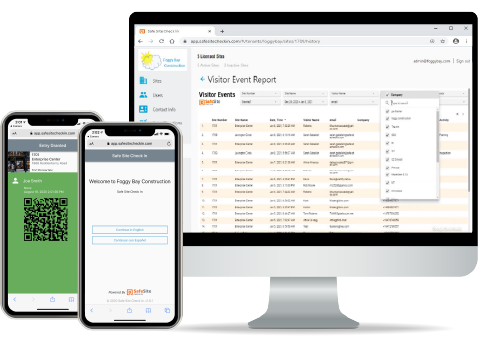
On top of all the features that make any Supers job easier, Safe Site Check In also automates compliance data collection with our easy-to-use, mobile-first, digital check-in platform. Intuitive to use without training on any device. Lightning-fast deployment with no apps to install or user licenses to track. Data instantly, securely and permanently cloud-stored.
SSCI is engineered to simplify the heavy compliance, labor tracking, and risk management demands unique to affordable housing construction—proving our signature promise: Make Jobsite Management EasyⓇ.
Watch our brief overview video to see how quick and effortless Safe Site Check In is to use on your jobsite.
The Evolving Landscape of Affordable Housing Funding and Compliance
Affordable housing project owners face some of the most rigorous jobsite reporting requirements in the commercial real estate sector. Unlike private-market builds, affordable housing developments rely on a web of municipal bonds, federal grants, and tax credits. General contractors must navigate strict community benefits agreements, local residency quotas, and stringent payroll audits to keep the project on track.
SSCI is easily used by even hundreds of workers and dozens of subs to capture the exact data municipalities and HFAs require. The data can be automatically uploaded to platforms like Procore and Autodesk, or extracted into CSV, Excel or PDF files.

The Risks of Outdated Field Logs on Funded Projects
Relying on hand-written sign-in sheets or physical clipboards jeopardizes project funding and potentially blows out operational budgets. Affordable housing face distinct financial vulnerabilities when reliant on paper data:
Compliance Penalties
Missing local hiring or MWBE targets due to poor tracking can result in revoked municipal funding or fines.
Wage Fraud Risk
Disconnected paper logs make it nearly impossible to cross-reference sub-contractor billings with actual on-site headcount, increasing the risk of prevailing wage violations.
Delayed Funding Draws
Manual tabulation of paper sign-in sheets slows down the reporting required by syndicators and lenders to release critical capital.
Affordable Housing Compliance Ecosystem

Digital Solutions for Heavy Compliance Demands
How Does Digital Check-In Simplify HUD Section 3 and Local Hiring Compliance?
Automated Section 3 & Local Hiring Audit Trails
HUD Section 3 and municipal funding sources mandate that a specific percentage of work hours go to low-income local residents or targeted zip codes. Through Safe Site Check In, digital check-in badges allow workers to easily self-report demographic or residency data upon arrival. This instantly generates automated, audit-ready local hiring reports for city agencies and state HFAs, eliminating the end-of-month paperwork scramble.
How Can Contractors Verify Prevailing Wage on Davis-Bacon Projects?
Prevailing Wage & Certified Payroll Verification
On Davis-Bacon projects, contractors must reconcile weekly certified payrolls against actual on-site headcount. Time-stamped daily check-in records provide prime contractors with an independent, cloud-based proof-of-presence log. Project managers can easily cross-reference sub-contractor billings, trade classifications, and reported hours against SSCI telemetry, significantly reducing wage fraud risk.
What is the Best Way to Track MWBE Participation in Real-Time?
MWBE Subcontractor Oversight
Affordable housing contracts often specify Minority and Women-Owned Business Enterprise (MWBE) utilization. Real-time site check-ins give project managers continuous visibility into exactly which tier-subcontractors are physically on-site. This live dashboard ensures prime contractors meet mandated participation benchmarks throughout every trade phase, avoiding surprise shortfalls at project closeout.
How to Protect Low-Income Housing Tax Credit (LIHTC) Deadlines?
LIHTC Schedule & Risk Protection
Missing Low-Income Housing Tax Credit (LIHTC) placement-in-service deadlines carries severe financial penalties or total credit forfeitures. Digital check-in protects your timeline by automating daily safety waivers, site hazard sign-offs, and real-time emergency muster rolls. By maintaining a proactive safety culture, SSCI helps prevent OSHA violations or site shutdowns that threaten your hard-coded completion dates.
How Can Developers Streamline Syndicator and Lender Reporting?
Investor & Lender Reporting
Syndicators, tax credit equity partners, and public lenders require regular progress verification before releasing funding draws. Digital check-in logs offer third-party investors transparent, automated proof of active job-site labor. General contractors no longer have to manually tabulate paper sign-in sheets; instead, they can export onsite labor hours with a single click. Agencies can receive periodic reports or have access to a live project dashboard.
Can Construction Tech Fit Within Developer Fee Constraints?
Low-Cost, Low-Tech Deployment
Affordable housing projects operate under strict Developer Fee limits and tight contingency caps. Safe Site Check In utilizes QR-codes that perform on any worker or visitor smartphone. Digital badges can be scanned at the gate using a tablet or phone just like boarding an airplane.
Does Safe Site Check In Integrate with Existing Construction Management Software?
Seamless Procore & Autodesk Construction Cloud Integration
Connect site-level compliance data directly into the enterprise tech stack you already use. Safe Site Check In automatically pushes daily workforce headcounts, total hours worked, weather observations, and digital sign-in logs directly into Procore and Autodesk Construction Cloud. Superintendents save hours on manual daily log entries while ensuring executive dashboards reflect live labor statistics, subcontractor headcount, and compliance metrics across every active affordable housing project.
How Can Developers Prove Local Hiring Commitments to City Boards and the Public?
Verifiable Local Impact for City Councils & Community Relations
Affordable housing developments often face intense public scrutiny, neighborhood reviews, and municipal oversight. Beyond simply meeting minimum compliance quotas, Safe Site Check In gives developers concrete, audit-ready data to demonstrate true local economic investment. You can easily export clean, visual reports for city council meetings, housing authority hearings, and public relations releases to prove your project is actively hiring from targeted local zip codes, supporting MWBE subcontractors, and reinvesting public dollars directly back into the surrounding community.
How Do You Verify Worker OSHA Certifications and Trade Licenses On-Site?
Automated Certification & Trade License Tracking
Eliminate the risk of un-vetted or non-compliant labor stepping onto your jobsite. During the initial mobile check-in process, workers can snap and upload photos of their OSHA 10/30 cards, trade licenses, specialized equipment certifications, or union credentials directly from their personal smartphones.
Compliance Efficiency Benchmarks
Traditional Paper Methods vs. Safe Site Digital Check-In

| Operational Parameter | Manual Paper Logs & Clipboards | Safe Site Check In Platform |
|---|---|---|
| Local Hiring & Section 3 | Manual data entry at month-end; highly prone to missing worker zip codes. | Workers provide demographic/zip code data for upload. |
| Prevailing Wage Audits | Blind trust in subcontractor self-reported payrolls and trade classifications. | Time-stamped, independent proof-of-presence logs to cross-reference against billings or verified payroll providers. |
| MWBE Tracking | Reactive tracking; prime contractors often realize shortfalls too late. | Real-time dashboards displaying exact tier-subcontractor headcount on-site daily. |
| Deployment Costs | High hidden labor costs (hours spent manually transcribing paper logs). | QR posters or single tablet; Cell or WiFi internet access. |
How It Works: Step-by-Step Compliace Implementation
Safe Site Check In embeds into daily construction habits via three clear steps designed to Make Jobsite Management Easy®

Configure Project Requirements
Superintendents and compliance officers map out customized access rules, safety waivers, and demographic/trade questions tailored to the specific municipal or HFA requirements of the build.

Scan and Self-Register
At the site entrance, trade workers scan the highly visible QR code with their native smartphone camera. Using any browser (no apps to download), Safe Site Check In guides them through a quick authentication, demographic selection, and safety orientation. Alternatively, Foremen can collect worker data ahead of project work for upload into SSCI.

Leverage Real-Time Compliance Telemetry
Every check-in/out event streams directly to a central cloud dashboard. Project supervisors and diversity officers maintain complete, real-time awareness over MWBE benchmarks, local hiring quotas, and active field headcounts.
Strategic Value Across the Project Matrix
Safe Site Check In serves as the continuous foundation of project data integrity for all affordable housing stakeholders.

For Prime / General Contractors
Eliminate the administrative nightmare of manual prevailing wage audits and subcontractor management. Synchronize crowded trade networks, ensure safety sign-offs, and easily generate the labor documentation required to get your pay apps approved faster.

For Property Developers & Syndicators
Protect your capital stack. Gain high-level, transparent visibility into site progress to satisfy tax credit equity partners and public lenders. Ensure your LIHTC placement-in-service deadlines are protected from easily avoidable compliance shutdowns.

For Diversity & Compliance Officers
Stop chasing paperwork. Instantly track HUD Section 3 targets, local zip code hiring mandates, and MWBE utilization quotas in real-time, ensuring you never fall behind on required municipal benchmarks.
The Safe Site Check In Impact
General contracting and development teams leverage Safe Site Check In’s rapid deployment to place zero-hardware QR verification checkpoints at perimeter gates and staging areas. Incoming trade crews, MWBE subcontractors, and local workers perform swift self-screenings—validating safety certifications, trade credentials, and residency zip codes before stepping onto the jobsite—continually safeguarding LIHTC placement-in-service deadlines, guaranteeing audit-ready HUD Section 3 and Davis-Bacon compliance, and keeping critical funding draws moving without friction.

Ready to Simplify Affordable Housing Compliance & Access Control?
Stop chasing paper sign-in sheets and manual payroll audits. Protect your capital stack, streamline local hiring reporting, and empower your site superintendents with real-time field data today.